His Grandmother’s Stories Stayed With Him. Now He’s Helping Other Seniors Share Theirs.
Before there was a storytelling program, there were visits to his grandmother’s house.
Maximillian Danner remembers listening to her describe her childhood and her experiences growing up during World War II. Those conversations became the inspiration for Defining Moments, the Los Angeles initiative he now leads at 17.
“What inspired me was going over to my grandmother’s house when I was younger and listening to her stories about her life as a child and experiences of growing up during World War II,” Danner says in written materials supplied by his team.
“She passed away almost four years ago and I feel that doing this with others is a way of allowing her legacy to live through me.”
His account locates that legacy in an activity he can continue: spending time with older people and listening to what they remember.
Making room for another person’s memories
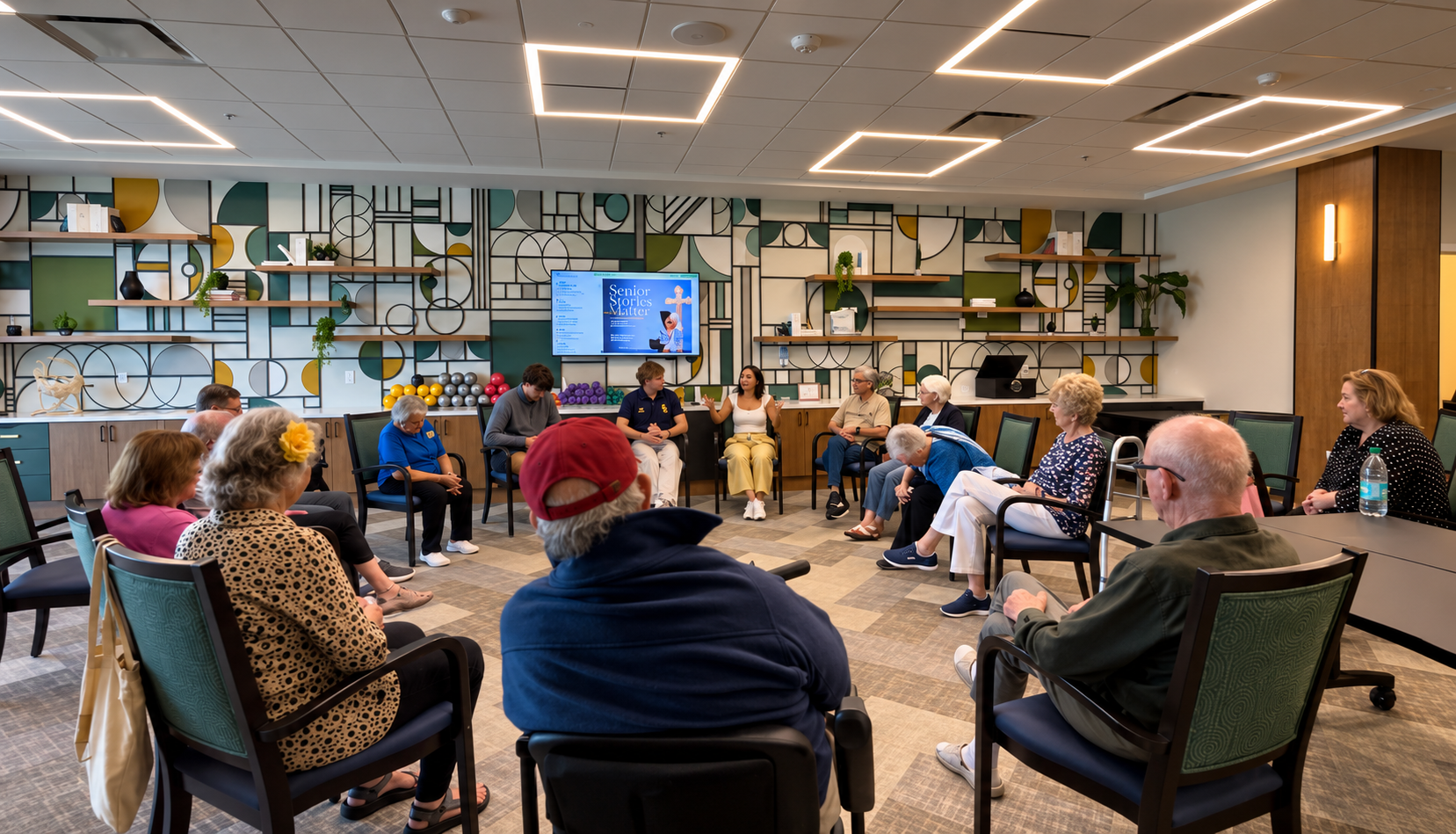
Defining Moments brings seniors together with high school students and college volunteers through guided storytelling, improvisation and reflection. The central invitation is to identify an experience that helped shape the person a participant became.
Some activities begin with a simple prompt. In the Connection Game, participants link a word to an experience in their lives and tell the story behind that connection. Other sessions include memory and vocal exercises, along with improvisation.
The format gives younger people a way into accounts of a time they did not live through. Danner describes spending time with elders who may have advice to offer and hearing “snippets into what life was like in a time before I was born.”
His grandmother’s memories explain why he wanted to begin. The experiences of other seniors supply the substance of the program as it continues.
A family conversation becomes a community event
Twice each year, the initiative holds Defining Moments: An Evening of Storytelling with Elders from Our Community. Seniors share one defining experience onstage, accompanied by photographs from their childhood and other significant points in their lives.
Relatives, friends, students and community members can attend. Audience questions give the speakers an opportunity to respond after telling their stories.
Before that public evening, participants are interviewed, helped to shape their accounts and guided through rehearsal. Teen and college volunteers share in facilitating the work.
The movement from a grandmother’s house to a community stage is the particular story here. An experience Danner valued within his own family became the basis for inviting other people’s family histories into a shared space.
He expresses the reason plainly: “Everybody has a story, but not everyone has someone to tell it to, so when you can help find an audience who wants to listen to it and can learn something of their own from it, it’s always a good thing.”
For Danner, his grandmother’s legacy now includes the time he makes for those other voices.
Source note: This feature is based on written program materials and statements supplied by Maximillian Danner’s team. Quotations come from those materials.