
Why Your “Routine” Surgery is My Highest Priority
In the medical world, doctors use the word “routine” a lot. We use it to describe a hernia repair, a gallbladder removal, or a standard biopsy. But if you are the one lying on the table, I know that word feels completely wrong.
There is no such thing as “routine” when it is your body, your recovery, and your life on the line.
Whether you are in Saskatchewan, where we are pushing toward new 2026 targets to cut down long waitlists, or in the rural reaches of West Virginia, surgery is a big deal. You’ve likely been waiting months. You’ve probably spent those months in pain, worrying about the “what ifs,” and feeling like just another number in a massive healthcare system.
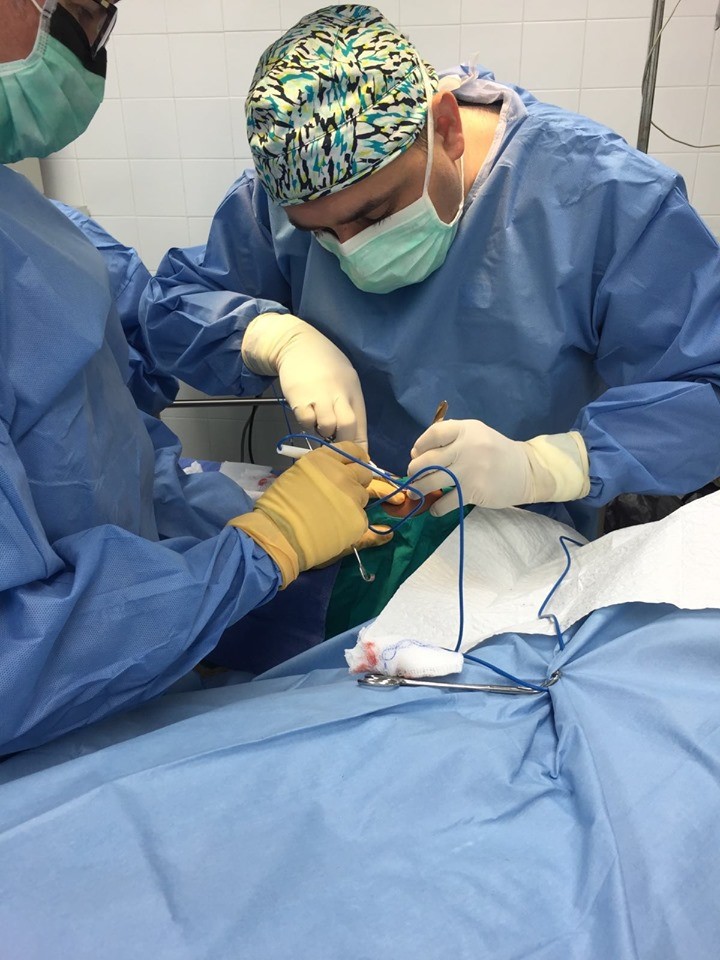
I’m Dr. Ali Cadili, and I want to tell you why my background in trauma surgery and international missions changes the way I handle your “routine” procedure.
The Trauma Surgeon’s Perspective on Safety
My day job often involves the unthinkable such as emergencies where every second counts and the margin for error is zero. People often ask me, “Why does a trauma surgeon do general procedures like hernias?”
The answer is simple: Safety.
When a surgeon is trained to handle a major trauma at 2:00 AM, they develop a level of technical confidence that is hard to match. Research shows that trauma-trained surgeons often have higher confidence and faster decision-making skills than specialists who only do elective work. Because I have seen the most complex “worst-case scenarios,” I treat your elective surgery with a level of precision and “fail-safe” planning that ensures the highest level of safety.
To me, your surgery isn’t “just another gallbladder.” It is a procedure that requires 100% of my focus so that you can get back to your family without complications.
Efficiency Born from Necessity
I recently led a medical mission where our team performed 30 surgeries in just seven days. Working in resource-scarce environments like Guatemala teaches you something that a comfortable hospital at home never can: Essentialism.
In the mission field, you learn to strip away the noise. You focus on the most efficient, effective way to get a patient healthy and back on their feet. I brought that “Mission Mindset” home with me.
- No Wasted Motion: I’ve refined my surgical techniques to be as efficient as possible.
- Systems That Work: My MBA isn’t just a degree on the wall; I use it to streamline my clinic so that you aren’t stuck in administrative limbo.
- Outcome Focused: In Guatemala, a successful surgery meant a farmer could go back to work and feed his kids. I see my local patients the same way.
Bridging the Gap in 2026
We know the statistics. In our area, even with millions in new investment, there are still over 10,000 people who have been waiting more than six months for care. In West Virginia, rural access is finally getting the funding it deserves, but the backlog is still real.
I know that preoperative anxiety affects up to 80% of patients. You aren’t just worried about the surgery but you’re worried about being forgotten.
You Are the Specialist of Your Life
I believe medicine is as much an art as it is a science. In my practice, I don’t just look at what the technology can do; I look at what you need to achieve. Success isn’t just a successful operation; it’s you being able to play with your grandkids, return to your job, or finally move without that constant, nagging pain. Your surgery may be “routine” to the system, but to me, it is the most important mission of the week.
Stop Waiting and Start Healing
If you’ve been told you’re on a months-long waitlist or you’re tired of feeling like a statistic, let’s change that. My team and I are dedicated to getting you through the process with the speed of a mission and the care of a specialist.
Call our office today to discuss your surgical options at Mineral County Rural Health Clinic (Keyser, WV): 304-597-3790 or WVU Grant Memorial Hospital (Morgantown, WV): 304-597-3500.